
By Fire Alarm Blueprint Trainer Editorial Team · Reviewed by Fire Alarm Blueprint Trainer Review Board — reviewed against NFPA 72 & NFPA 70 principles
Preparing for a Fire Alarm Inspection
Inspections validate design and installation. Thorough documentation and a self-check prevent failed inspections and costly delays.
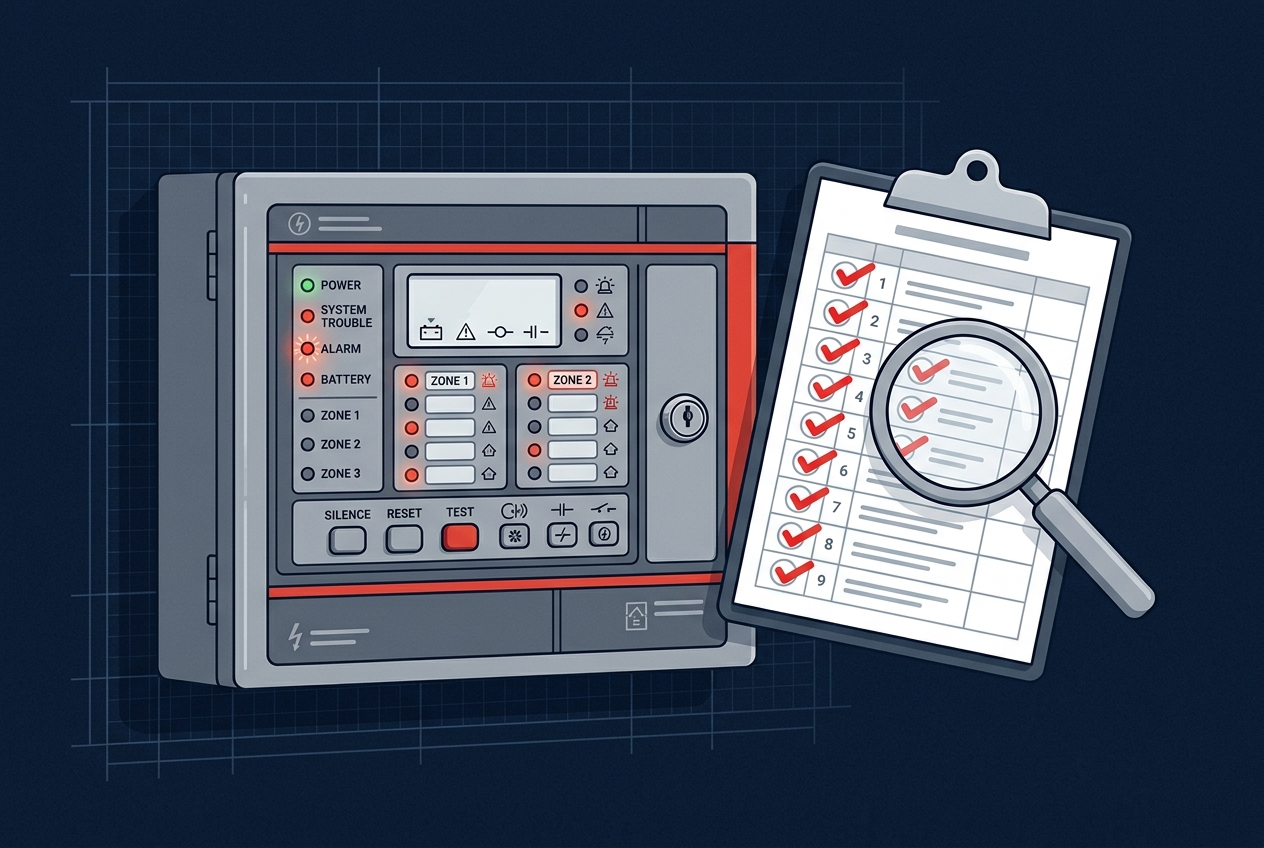
Acceptance vs periodic inspections
Acceptance (commissioning) inspections verify a new or modified system before it is placed in service. Periodic inspections confirm ongoing performance over the system's life. Both rely on functional testing and records.
Documentation inspectors expect
Have the approved drawings, sequence of operation, battery and voltage-drop calculations, device records, and completed test documentation ready. Organized paperwork signals a well-managed system.
Common review items
Frequent items include coverage gaps, notification below performance goals, mislabeled devices, missing supervision, and incomplete records. A self-inspection against the approved design catches most before the AHJ arrives.
This article is educational and non-authoritative. It is not a substitute for the adopted code edition, manufacturer instructions, licensed design, or AHJ approval.
Frequently asked questions
What documentation do inspectors expect?
Have the approved drawings, sequence of operation, battery and voltage-drop calculations, device records, and completed test documentation ready and organized.
What's the difference between an acceptance and a periodic inspection?
An acceptance (commissioning) inspection verifies a new or modified system before it is placed in service, while periodic inspections confirm ongoing performance over the system's life. Both rely on functional testing and records.
What are common reasons a fire alarm inspection fails?
Frequent issues include coverage gaps, notification below performance goals, mislabeled devices, missing supervision, and incomplete records. A self-inspection against the approved design catches most before the AHJ arrives.